
Burkina Faso: adolescents create a game to talk about humanitarian aid
In five days, 23 refugee, displaced and host-community adolescents created a game that Terre des hommes now distributes.
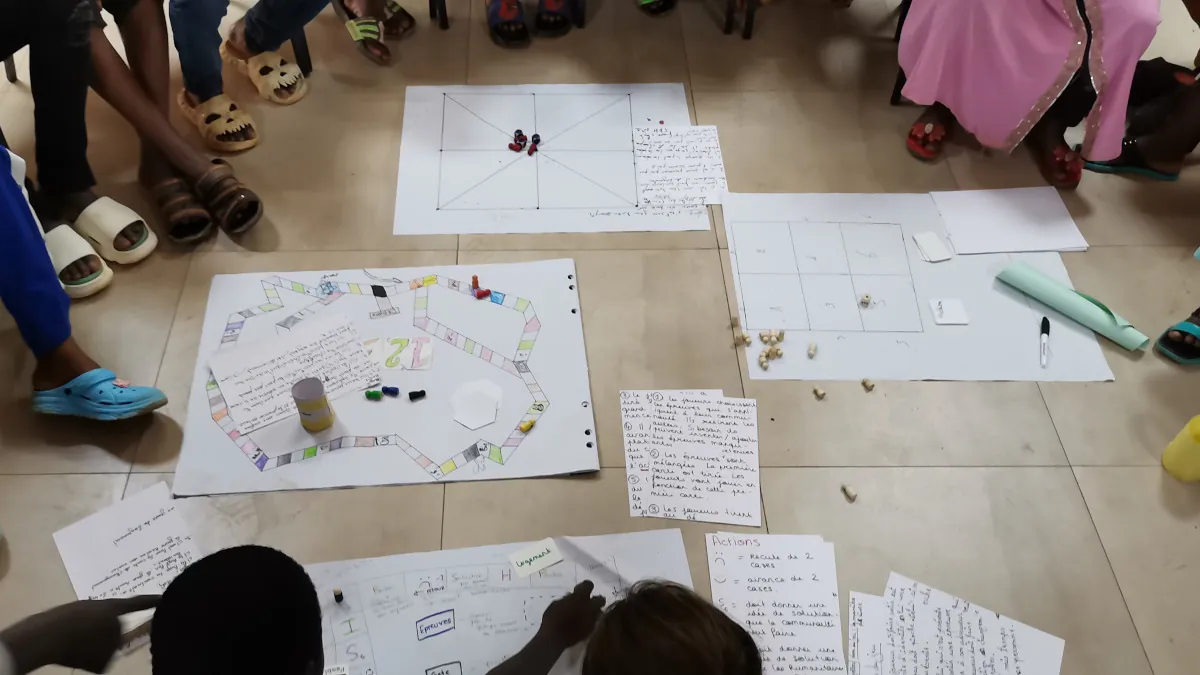
Context
In Burkina Faso, children made up more than half of the people affected by the crisis in 2024. Consulted in 2022, they said their opinion did not matter and feared speaking out. Terre des hommes and Ground Truth Solutions were looking for a tool to truly listen to them.
Intervention
I designed a five-day game jam in Ouagadougou and co-facilitated it with a Terre des hommes psychologist. The young people first played, then invented their own games in teams. At the same time, six members of the local team learned the method to reproduce it in other towns.
Ethics and safety
The ethics protocol anticipated fifteen risks, including mockery, fatigue and pressure from adults. Parents and adolescents each signed a consent form, which could be withdrawn at any time with no effect on the aid received. I signed the Terre des hommes child safeguarding code of conduct. No face was photographed; a focal point could refer any child in distress. For security reasons, the local team led the sessions outside the capital.
Observed effects
- More than fifteen prototypes, merged into one common game on the last day
- 70 other children in Tougan and Ouahigouya tested and modified it
- A toolkit published by Terre des hommes (2025), crediting the children as co-authors
- An article in Plato Magazine (2024) and a scientific article in press
What it shows
Young people affected by a crisis can design the very tool used to listen to them, provided it is clear what they decide and what adults decide. As one team member put it, creating is much easier for children than for adults.