
Between Italy and France: a research notebook on the health of migrants at the border
A public research notebook and the translation of a black book on a detention centre, to document the living conditions of migrants between Italy and France.
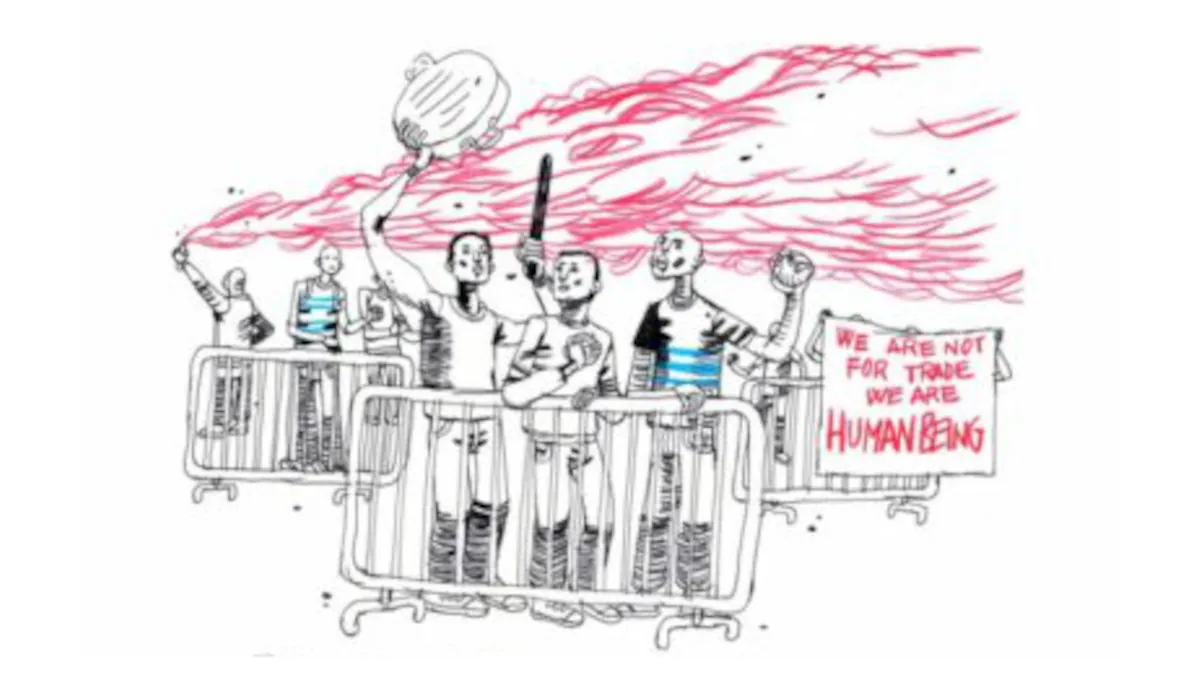 © Emanuele Giacopetti
Context
Despite the Schengen agreements, the border between Italy and France has been reinstated. French authorities in Menton and Briançon send back about 150 people to Italy every day, without respecting their right to apply for asylum. In Ventimiglia and Oulx, these people have no access to decent living conditions: food, toilets, shelter, information. The law clinic of the International University College of Turin launched a legal advocacy project on their health.
Intervention
With students of the clinic, I co-edited the research notebook “Duty of care in Italy-France migration”, opened in April 2021 and written in English. We gathered the existing sources there: over 50 articles and reports, 20 videos and 140 news items. We went to Ventimiglia on 7 and 8 June 2021 to meet people in transit and support organisations. After the death of a young migrant in the Turin detention centre, we translated into English and French, with four other people, the black book published by the Association for Juridical Studies on Immigration (ASGI).
Observed effects
- A public research notebook in English with five notes (2021)
- A list of over 50 articles and reports, 20 videos and 140 news items from civil society organisations, researchers and the media
- The black book on the Turin detention centre, translated into English and French, open access on Zenodo (2021)
- A guest post on the University of Oxford's Border Criminologies blog, with a student of the College (2022)
What it shows
An open notebook can bring to light a situation that public decisions leave in the shadows: gathering sources, translating them and publishing them in open access lets others take them up. The notebook itself notes a limit: most daily information comes from France and supports migrants' voices, while the view of the local population and of the authorities remains under-represented.